Rebuilding an event stage with updated branding used to take a chain of specialists — a modeller, a texture artist, someone to light and render, a designer to mock the identity onto the still in Photoshop. Several days, four handoffs. I did a version of it in an afternoon, alone, from a single event photograph.
To be precise: this is about the approval stage, not the build. Everything downstream still belongs to the specialists, and this pipeline hands off to them rather than replacing them.
TL;DR
- Scope: fast-turnaround client visualisation, not production or fabrication.
- Every tool in the chain is public and cheap. Access is not the differentiator.
- The order is — each step removes a guess the next step would otherwise make.
Why does the approval stage break?
Because the cost of producing an option is out of proportion to how provisional the option is. Days of specialist time to make something whose entire purpose is to be reacted to, and possibly discarded.
So the process adapts defensively. You go away, you come back with one carefully chosen option, and you present it as a proposal to be defended rather than a sketch to be pushed on. That is not a productivity problem — it is a problem with the shape of the conversation. When an option takes an hour, you can sit with the client and move: try it darker, try the device smaller, try it from where the cameras will actually be.
In this case the chain could not start at all. There was no 3D file of last year's build — different contractor, different year, nobody's asset library. The only input was event photography shot from wherever the photographer happened to stand.
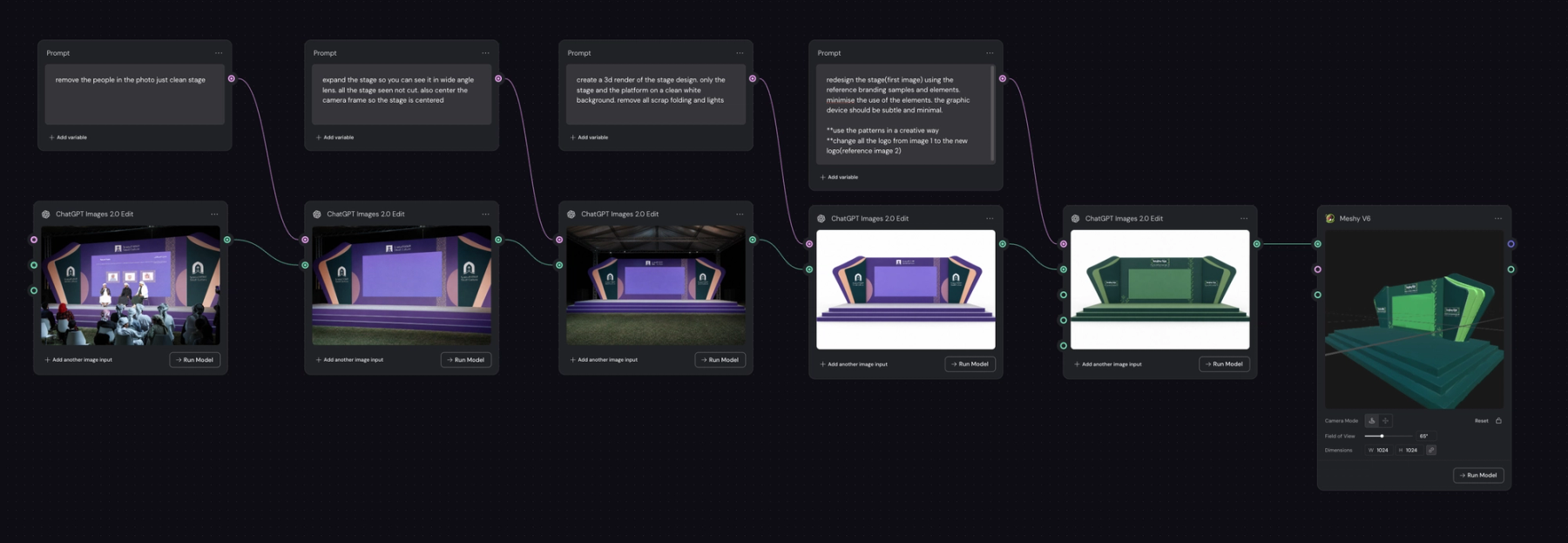
The pipeline, step by step
Input — the source photograph A documentation shot of the previous build. Wide crowd, partial stage, house lighting, rigging in frame. Never intended as a reference.
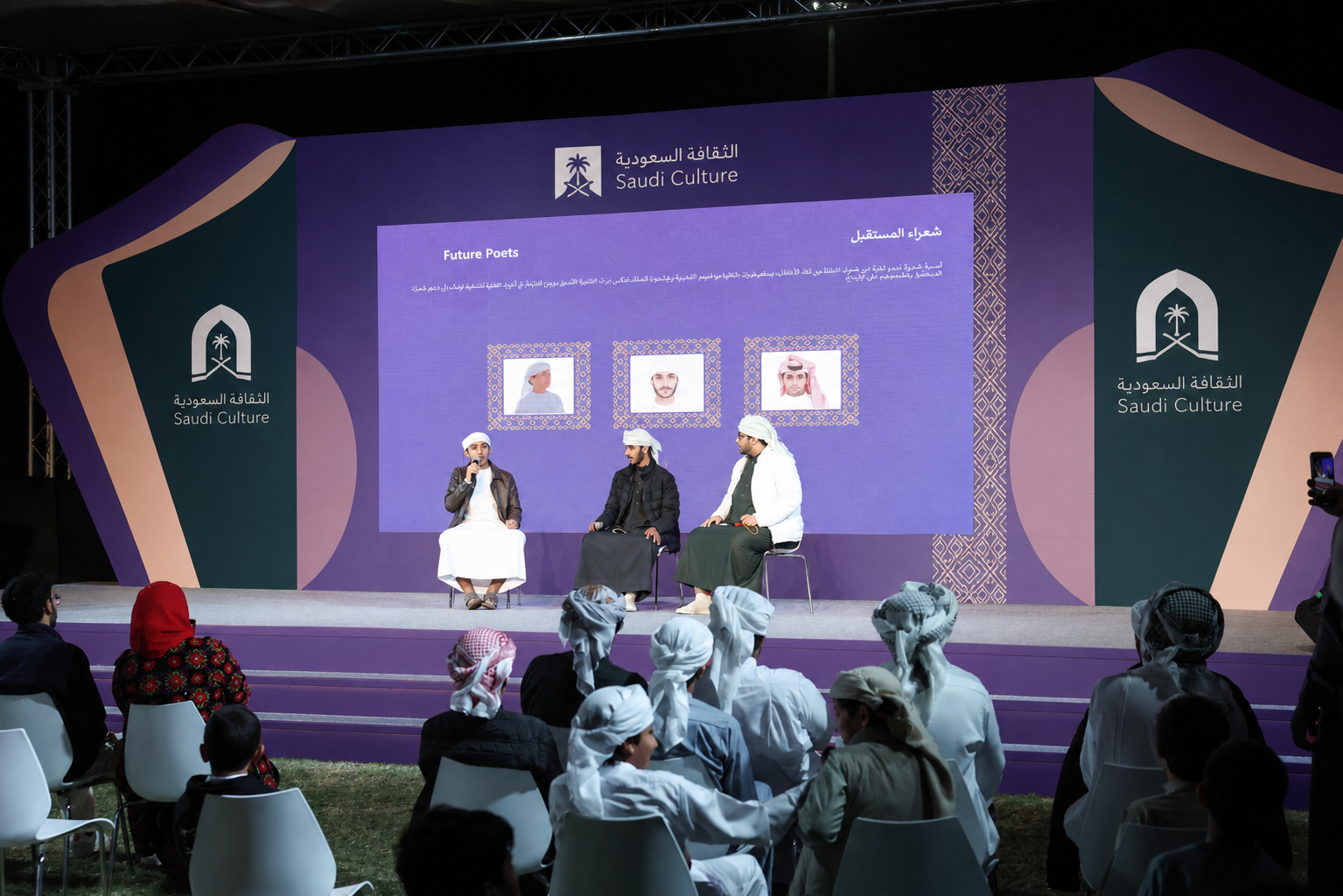
1. Strip the scene
Image edit model · in: source photograph · out: empty stage
People and foreground clutter removed, structure left intact. This runs first because a model asked to extend a frame full of people will invent more people.
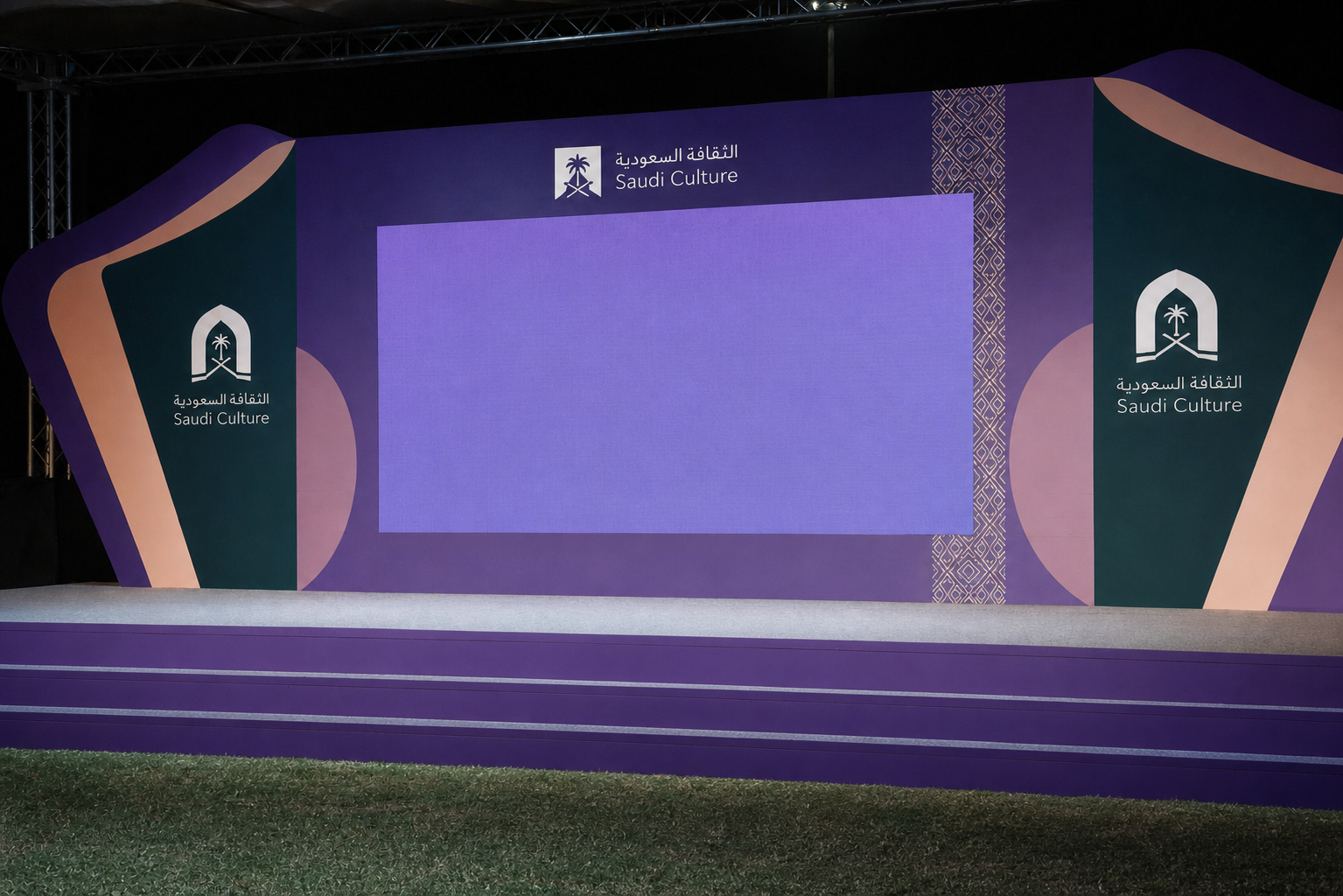
2. Widen and centre
Image edit model · in: cleared stage · out: full structure, centred
The original composition cropped the build. Expanding to a wide-angle framing recovers the panels the photographer cut off. You cannot isolate a structure you can only partly see.
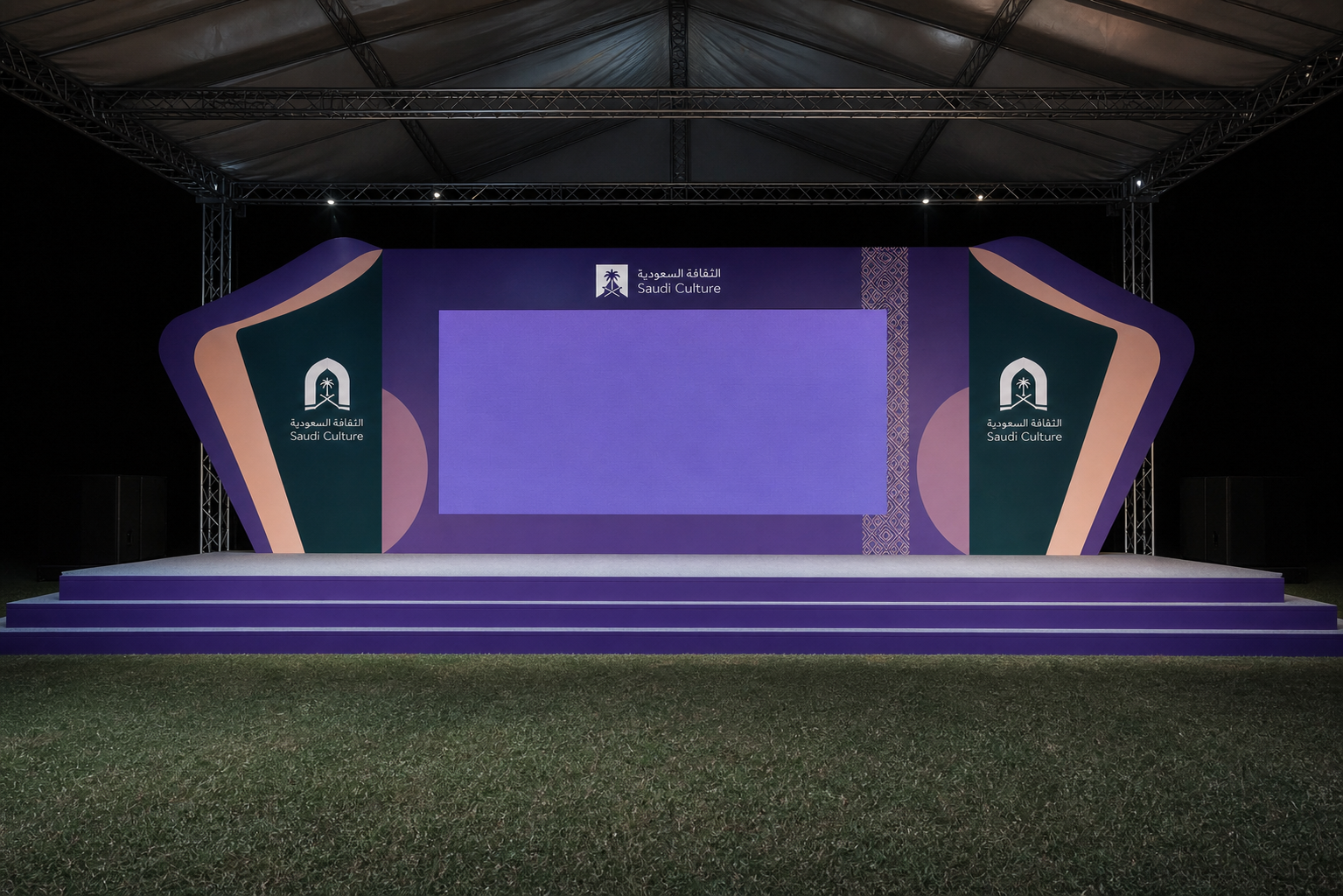
3. Isolate on neutral ground
Image edit model · in: widened frame · out: clean structure on white
Truss, ambient lighting, and incidental scenery dropped. Left in, an image-to-3D model will faithfully reconstruct the folding chairs.

4. Apply the new identity
Image edit model · in: isolated stage + brand reference sheet · out: rebranded structure
Logo, palette, and one graphic device from the new brand system. The instruction here was restraint — minimise the elements, keep the device subtle.
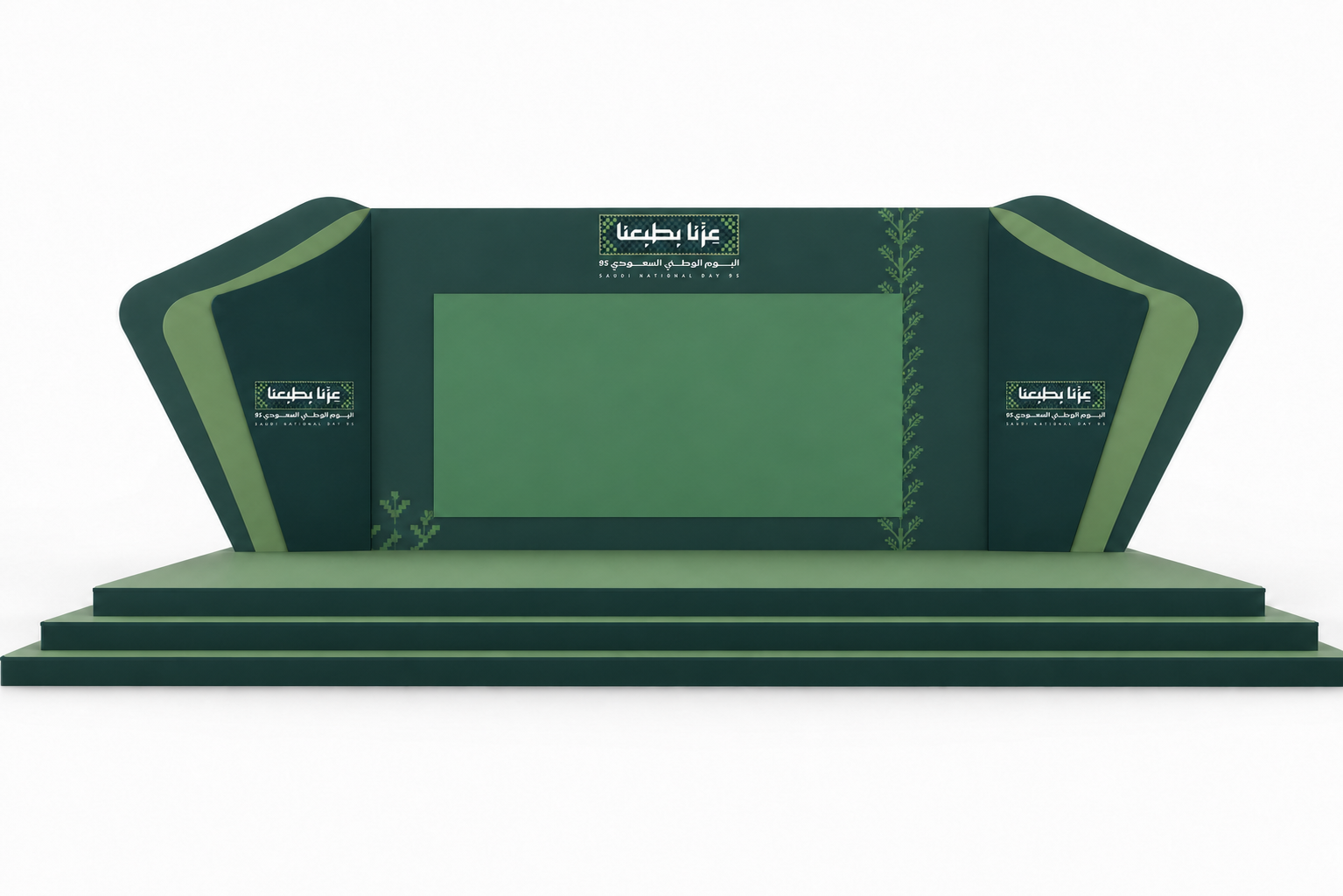
5. Convert to geometry
Meshy V6 · in: rebranded structure · out: 3D mesh
The step that changes everything after it. The design now has one definition instead of being re-guessed per render, and camera position and field of view become numbers to set rather than adjectives to describe.
6. Render the scene
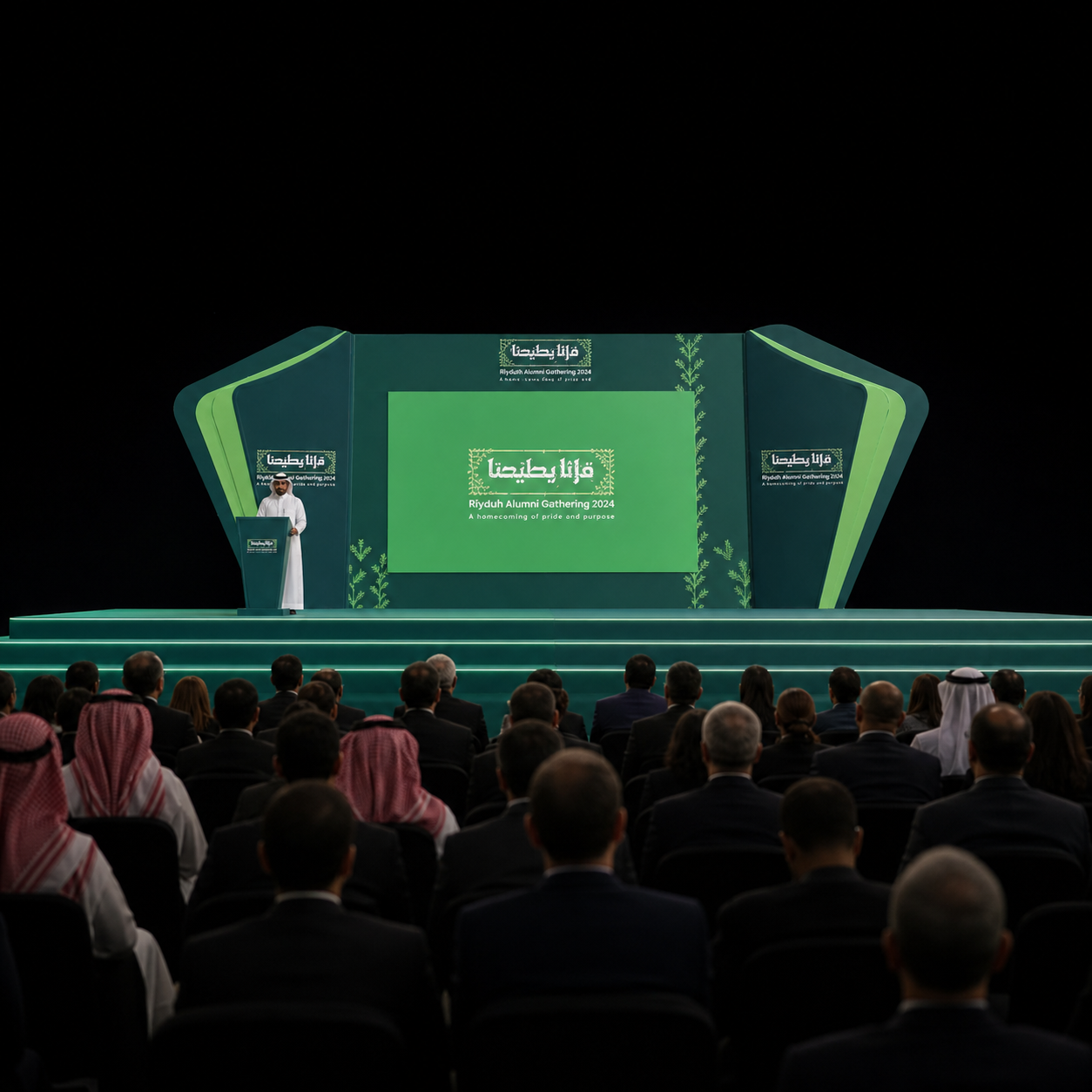
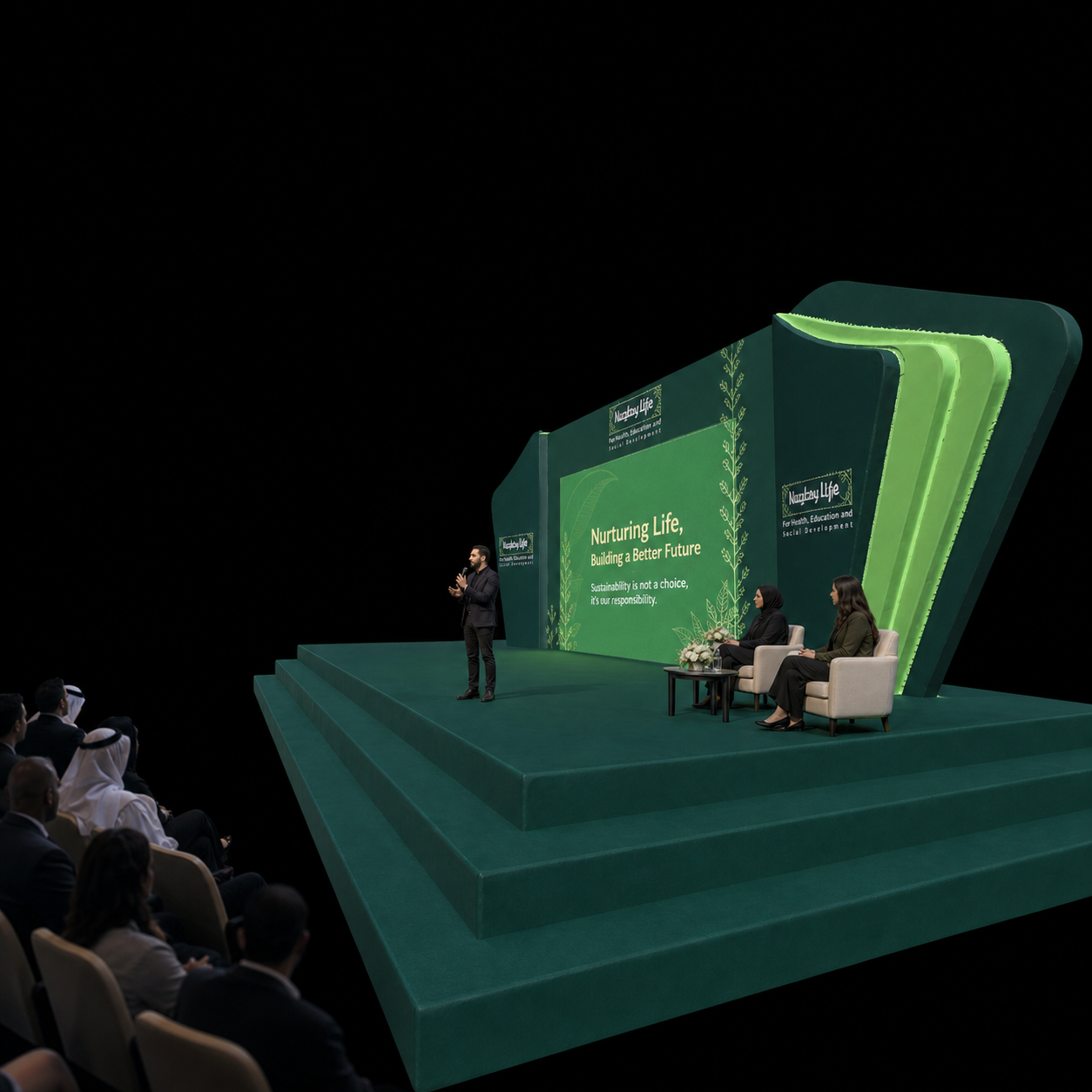
Image edit model · in: mesh + scene prompt · out: finished visualisation
Audience, speakers, lighting, atmosphere — from any angle, on the same object. The mesh holds the shape; the render pass handles the surface.
Why is the order the skill?
None of these tools are hard to obtain. They are a browser tab and a subscription. If access were the differentiator, everyone with a card on file would be producing this.
What is not obvious is why the sequence runs in that direction. Each step exists to remove information the next step would otherwise invent. Run the same four edits in a different order and every one produces plausible garbage — the failure mode that makes generative work look unreliable to people who have only seen it done badly.
That is the craft claim. Not tool access, not prompt phrasing. Knowing what each model is good at, what it invents when under-specified, and what has to be true of its input before it can succeed.
Where this hands off
The mesh is visualisation-grade. Loose topology, no real-world dimensions, no construction detail — nothing a fabricator could price or build from. Anything that gets built goes to a 3D artist and a technical team, who now start from a blockout and an approved direction rather than a blank scene and a brief.
And no step in the pipeline decides restraint. Left alone, a model tiles a pattern across every available face, because more application reads as more effort. Choosing which two elements carry the identity and which four to leave out is the authorship, and it does not delegate.
Mico Pedrigal builds AI-enabled creative systems. Based in Riyadh, working across the Gulf.